A horse’s digestive system is uniquely sensitive and is designed to rely entirely on a constant intake of fiber. For this reason, the feeding order is especially important: hay first, then concentrates. While many horse owners, especially during the morning rush, tend to give oats or other starch-containing concentrates first, this can actually pose several risks to the horse.This article provides a detailed explanation of why the correct feeding order is crucial, what processes occur in the horse’s stomach and intestines during feeding, and what problems can arise if a horse receives concentrated feed on an empty stomach.
Why the Correct Feeding Order Is Critical – Hay Always Before Concentrates
For horses, hay forms the foundation of healthy digestion. Its fiber content makes it slowly digestible, requires extensive chewing, and provides natural protection for the stomach. If a horse consumes an adequate amount of hay before starch-containing concentrates, several positive physiological effects occur:
1. Hay Reduces the Harmful Effects of Stomach Acid
A horse’s stomach continuously produces acid, even when not eating. Fibrous feed like hay acts as a buffer, stimulates thorough chewing, and promotes saliva production, which naturally neutralizes stomach acid.
2. Slower Digestive Transition – Safer Starch Absorption
The fibers in hay help retain the stomach contents, so when oats or other concentrates arrive later, starch is gradually released into the small intestine. This prevents large amounts of starch from reaching the hindgut all at once, where it can ferment and cause acidity.
3. Natural Feeding Rhythm
Wild horses graze on small amounts of fiber throughout the day and rarely consume large quantities of concentrated feed at once. Feeding hay first mimics this natural process.
Why Feeding Concentrates First Is Risky – Starch Digestion Hazards
Oats, corn, muesli, and other concentrates contain high levels of starch, which can provide quick energy but only if the digestive system processes it in the correct order.
1. Rapid Gastric Emptying and Acid Damage
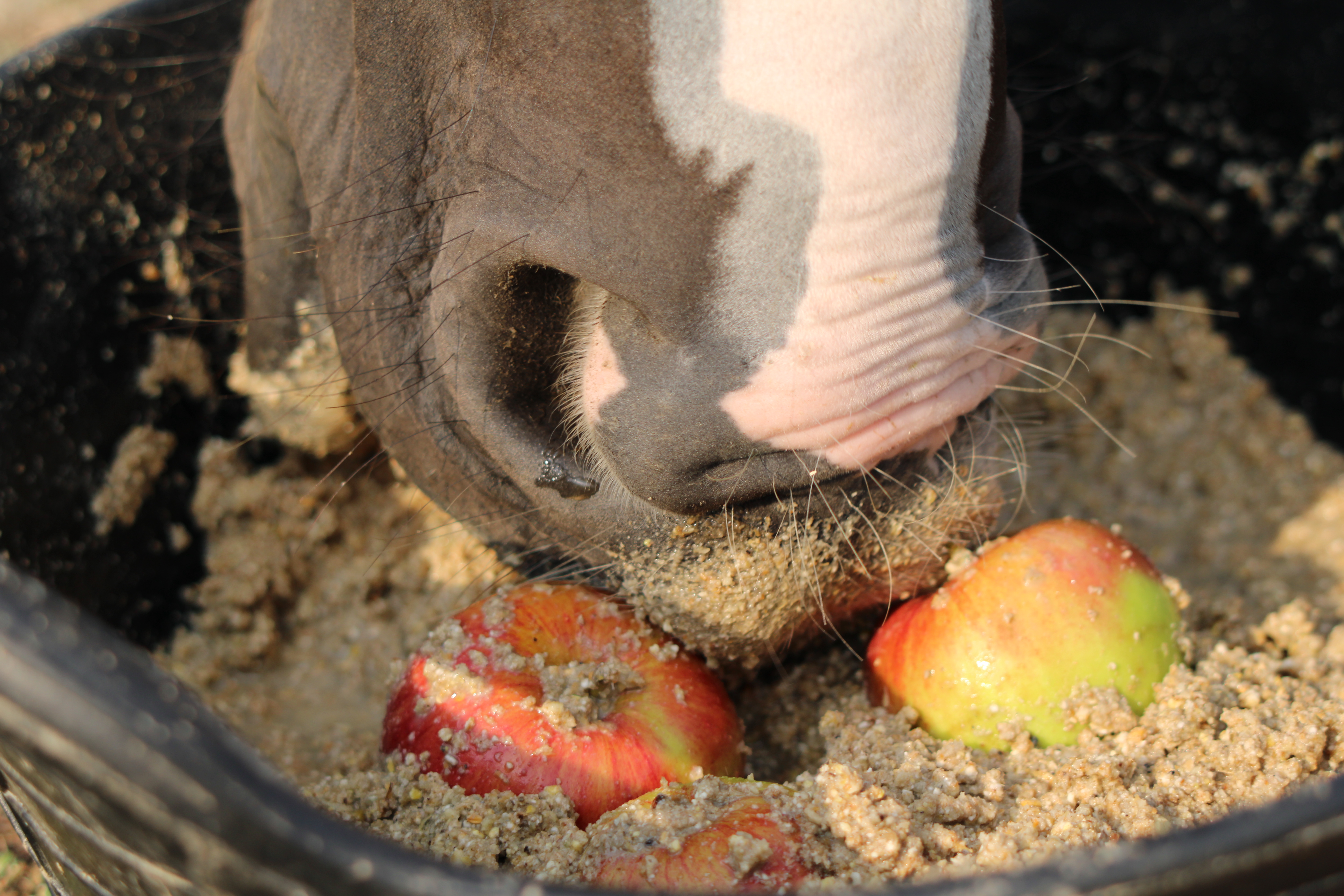
When a horse receives concentrates on an empty stomach, it tends to eat quickly with little chewing, producing minimal saliva. Stomach acid then directly contacts the sensitive lining, increasing the risk of gastric ulcers over time.
2. Excess Starch Reaching the Hindgut
If starch moves too quickly from the small intestine to the hindgut, the balance of gut bacteria is disrupted. Rapid starch fermentation leads to:
- Increased acid production
- Bacterial die-off
- Toxin release
This process is a leading cause of laminitis and can also trigger severe colic.
3. Bolting and Choke Risk
Hungry horses often bolt starch-containing feed, which can cause esophageal obstruction (choke).
Correct Feeding Order
Professional recommendations suggest the following feeding sequence:
- Hay first (at least 20–30 minutes of continuous grazing)
- Water available at all times
- Then concentrates (oats, muesli, pellets, supplements)
This order ensures safe starch digestion and minimizes the risk of gastric ulcers, colic, or metabolic laminitis.
Hay vs. Starch-Based Concentrates – Key Takeaways
- Hay: the horse’s stomach “protective lining”
- Concentrates: the horse’s “fuel” – only safely utilized when the stomach is already lined with fiber and saturated with saliva
Incorrect feeding order is not just a bad habit; it is a significant health risk.
Signs of Gastric Ulcers in Horses
One of the most common consequences of improper feeding is gastric ulcer, which affects sport horses, leisure horses, and young horses alike. Symptoms may include:
- Loss of appetite or picky eating
- Colic, abdominal discomfort, girth sensitivity
- Watching feed without eating
- Weight loss, visible ribs
- Restlessness after feeding
- Teeth grinding
- Poor coat quality, dull hair
- Bloating, gassiness
- Irritability, behavior changes
- Decline in performance
- Gum recession or inflamed oral mucosa due to acid
- Frequent hollowing of the abdomen, “air biting”
If any of these signs appear, especially when starch-based feed is given before hay or at irregular times, gastric ulcers are highly likely.
What to Do if Gastric Ulcer Is Suspected – Meglio Digest Shield Recommendation
If your horse shows signs of gastric ulcers, or for preventive care, in addition to restoring the correct feeding order, consider a supplement that:
- Protects the stomach lining
- Supports digestion
- Reduces acid-induced irritation
- Stabilizes gut flora
Meglio Digest Shield is specifically designed to protect the horse’s stomach and intestinal health. Its use can:
- Alleviate ulcer symptoms
- Support healing
- Help prevent future stomach problems
This product is regularly used alongside veterinary ulcer treatments, to reduce acid overload in competition horses, to manage stress during long travels, and as a supportive treatment for mild ulcers.