









Frozen, hard ground significantly reduces natural shock absorption. When a horse moves under these conditions, greater mechanical forces are transmitted to the joints, tendons, and ligaments with every single step. This load does not necessarily cause immediate injury, but over the long term it can lead to micro-level changes that later appear as stiffness, inflammation, or restricted movement.
To understand this, it is worth taking a closer look at how a horse’s joint functions. A joint is not merely the meeting point of two bones, but a complex system. Articular cartilage provides a smooth surface, synovial fluid ensures lubrication and nutrient supply, the joint capsule and ligaments provide stability, while tendons and muscles are responsible for controlling movement. Ideally, this system is elastic and capable of absorbing the forces generated during motion.
In winter, however, this balance can easily be disrupted. Cold temperatures reduce tissue elasticity, the circulation of synovial fluid may slow down, and frozen ground is unable to cushion impacts. At the same time, a horse’s need for movement often does not decrease—in many cases, it actually increases. This creates a situation in which the horse is eager to move, while its joints and tendons are exposed to increased strain.
Tendons and ligaments are particularly sensitive during this period. Under normal circumstances, these tissues store and release elastic energy, supporting efficient movement. In cold conditions, however, they can become stiffer while the level of workload remains unchanged. This increases the risk of micro-injuries, which at first may only show up as mild stiffness or a longer, more difficult warm-up phase.
The goal of winter joint support is not to treat an already existing problem, but to prevent changes caused by overload. At this time, it is especially important to support cartilage metabolism, maintain proper synovial fluid function, and assist the regeneration of connective tissues.
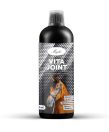
Vita Joint and Vita Joint Gold provide support in this complex process. With regular use, they can help joints and tendons cope better with winter strain, maintain smoother movement, and ensure that the cold season does not leave a lasting mark on the horse’s musculoskeletal condition. Vita Joint is primarily ideal for prevention and maintenance, while Vita Joint Gold offers more intensive support for horses under increased workload, older horses, or those more prone to winter stiffness.
It is important to recognize that the effects of freezing weather are not something that appear later—they are shaping joint health right now. Micro-injuries develop in the present, which is why timing support correctly is crucial. Conscious winter joint protection can help preserve a horse’s freedom of movement and comfort in the long term.
While this frosty weather lasts, Vita Joint and Vita Joint Gold are available with a –10% discount using the VITAJOINT coupon code between January 18 and 23. Winter is not the time for postponement, but for prevention.
And in our opening image, of course, a beautiful Meglio user is shining—just as always.