The “biotin = healthy hooves” idea is one of the most widespread – and most misleading – myths in equine nutrition. Many people believe that if they provide enough biotin, the hoof will automatically become strong, resilient, and crack-free. The reality is far more complex: the hoof is a living, continuously renewing tissue, and its development and maintenance require a complete nutritional system – not just a single vitamin.
Biotin (vitamin B7) does play a key role in keratin formation, which is the hoof’s primary structural protein. Several studies have shown that, over the long term (at least 6–9 months), it can improve hoof quality. However, biotin alone does not “build” the hoof – it is just one link in the entire chain.
The problem begins with the fact that keratin is not made of biotin alone. If the proper amino acid profile, minerals, or other vitamins are lacking, then no matter how much biotin we provide, there will be no stable structure to build from. It is like having excellent-quality paint for a house – but no bricks or cement.
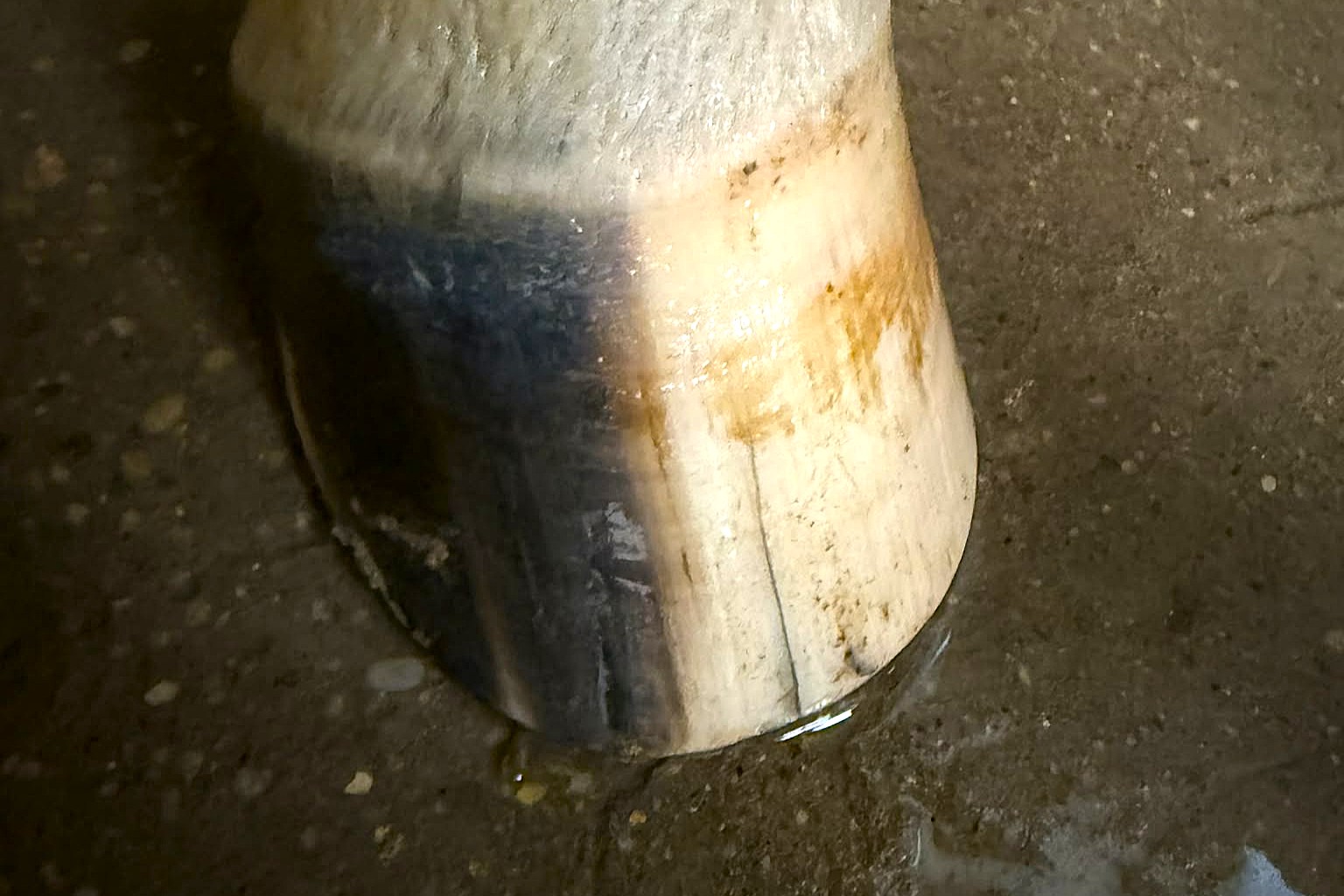
Keratin is the foundation of the hoof, an exceptionally durable protein that is continuously produced and renewed. However, its formation requires much more than the presence of a single vitamin. While biotin participates in the keratinization process, it is not the actual “raw material”; that role belongs primarily to sulfur-containing amino acids, especially methionine. If these are not present in sufficient amounts, then even with biotin available, the body simply cannot build stable, high-quality hoof horn. This is when the problems commonly seen in practice begin to appear: cracked hoof walls, slow growth, weak structure, and poor nail-holding ability.
Added to this are trace minerals, without which the entire process simply “falls apart.” Zinc, copper, and manganese may not be flashy or marketing-friendly ingredients, but they play a key role in ensuring that the hoof is truly strong and resilient. These elements regulate cell formation through enzymes and contribute to connective tissue stability and keratin quality. If any of them are lacking or present in the wrong proportions, the result will be a compromised hoof structure that no amount of “extra biotin” can fix.
The picture is still incomplete, however, because hoof quality depends not only on what the horse eats, but also on what it is actually able to utilize from its feed. The condition of the digestive system, nutrient absorption efficiency, and liver function all have a direct impact on hoof growth. A stressed body – for example due to a dusty environment, lower-quality forage, or the presence of mycotoxins – cannot utilize the nutrients consumed in an optimal way. This is where many “biotin treatments” simply fail: the active ingredient enters the body, but it is not properly incorporated.
That is why hoof support cannot be reduced to a single ingredient. The real solution always takes a holistic approach, where the building blocks, supportive vitamins, minerals, and components that promote proper body function work together. This is the philosophy behind Meglio Hoof Doctor. The product is not simply a “biotin supplement,” but a comprehensive formula that covers every important aspect of hoof structure (as illustrated on the opening image).
DL-methionine provides the foundation from which keratin can actually be built. Biotin, when present in the proper amount, supports this process, but not on its own; it works together with the full B-vitamin complex, which drives metabolism and cell formation. Zinc, copper, and manganese help ensure that the developing tissue is not only formed, but also remains durable, flexible, and resilient. In addition, milk thistle, artichoke, burdock, and yarrow contribute by supporting the background processes that do not build the hoof directly, but make proper hoof development possible – digestion, nutrient absorption, detoxification, and circulation – without which even the best ingredients cannot function effectively.
This is why the difference is not merely theoretical. With a well-designed, comprehensive hoof-support formula, the improvement is not seen in just “one factor,” but across the entire picture: faster and more even growth, a denser structure, better-quality hoof horn, and more stable hooves under load. And that is precisely what biotin alone can never guarantee.
The myth, therefore, is partly true – but only enough to be misleading. Biotin is important, but it is not the solution. Hoof health does not depend on a single active ingredient; it depends on a well-balanced system. Once we understand this, we stop merely “experimenting” with different supplements and instead consciously build the foundation that delivers reliable long-term results. It is in this context that Meglio Hoof Doctor stands out as one of the most comprehensive and thoughtfully formulated solutions available for supporting hoof structure.